

Overcoming geography
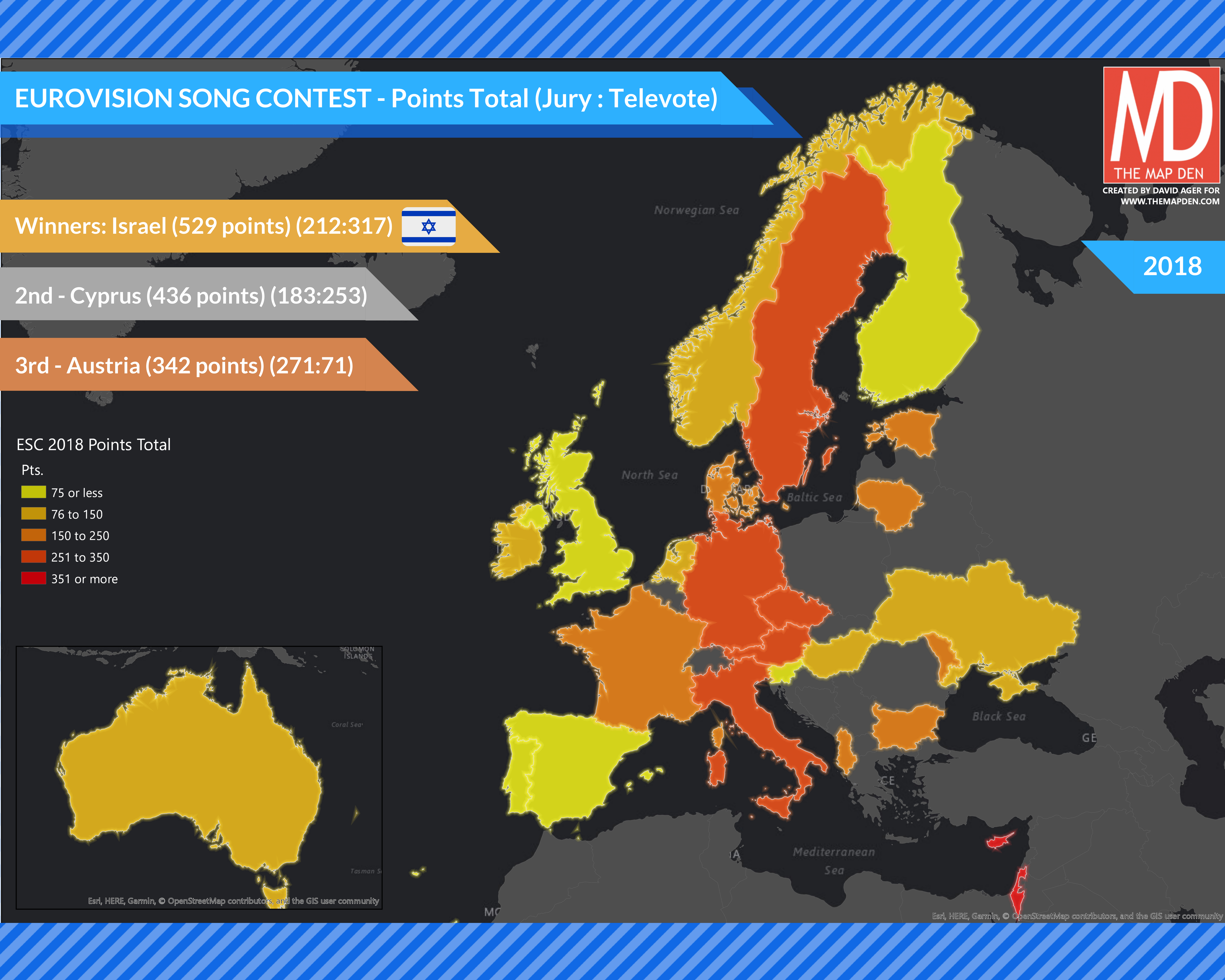
While dust settles in Lisbon, after another crazy night of Eurovision revelry, we can now take time to analyse the patterns of this most geographical of contests. Netta Barzilai won the contest with the song “Toy” for Israel, overcoming it’s isolated geography and lack of neighbours, to win the Eurovision Song Contest 2018. Maybe the best song really does triumph over geography and ‘political voting’. This is a topic I have covered in the past, and while it would be naive to think this is a solely music contest – one only had to hear the audible boos when the televoting came from Russia. There are some givens, which I have demonstrated previously – Greece and Cyprus will vote for each other, the Scandinavian bloc will look out for each other, and the historical legacies of former Yugoslavia and USSR still present themselves.
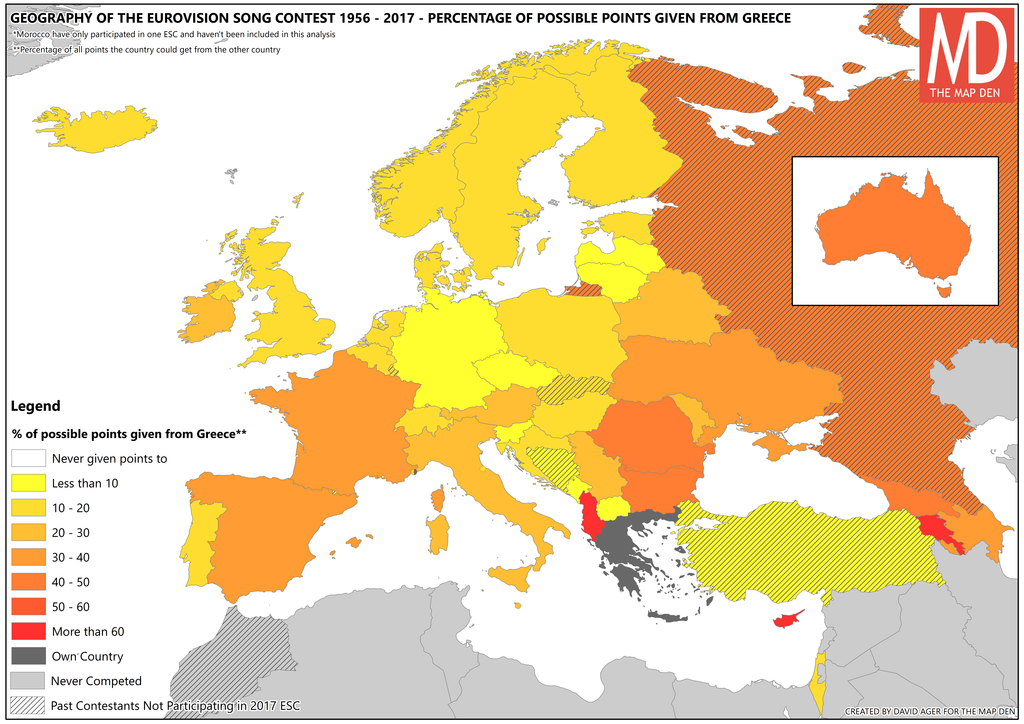
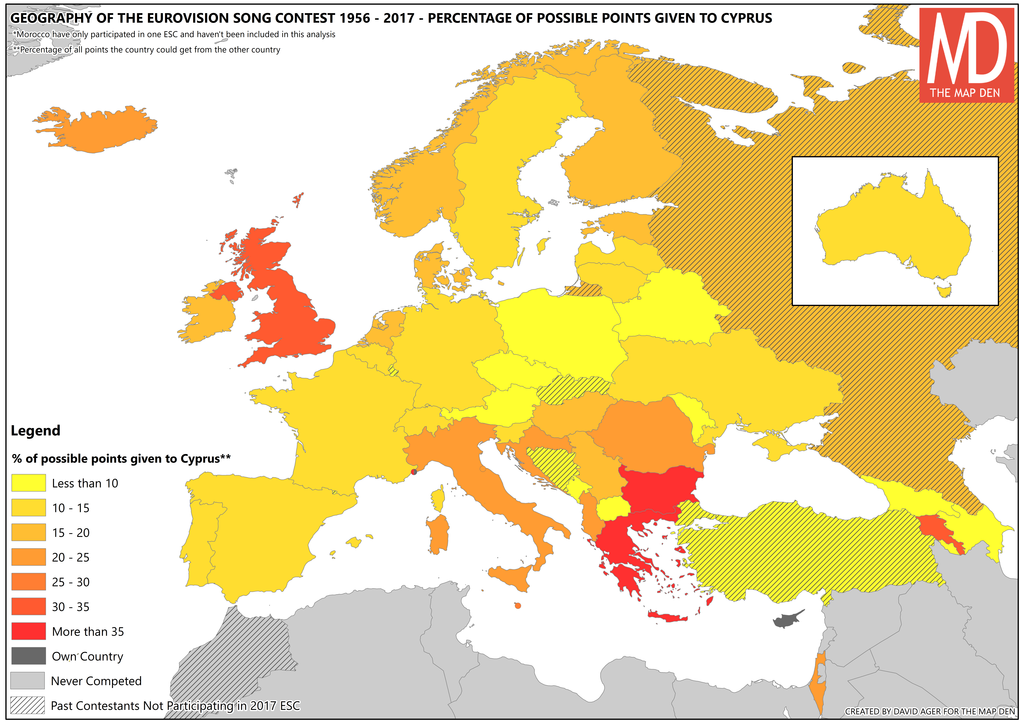
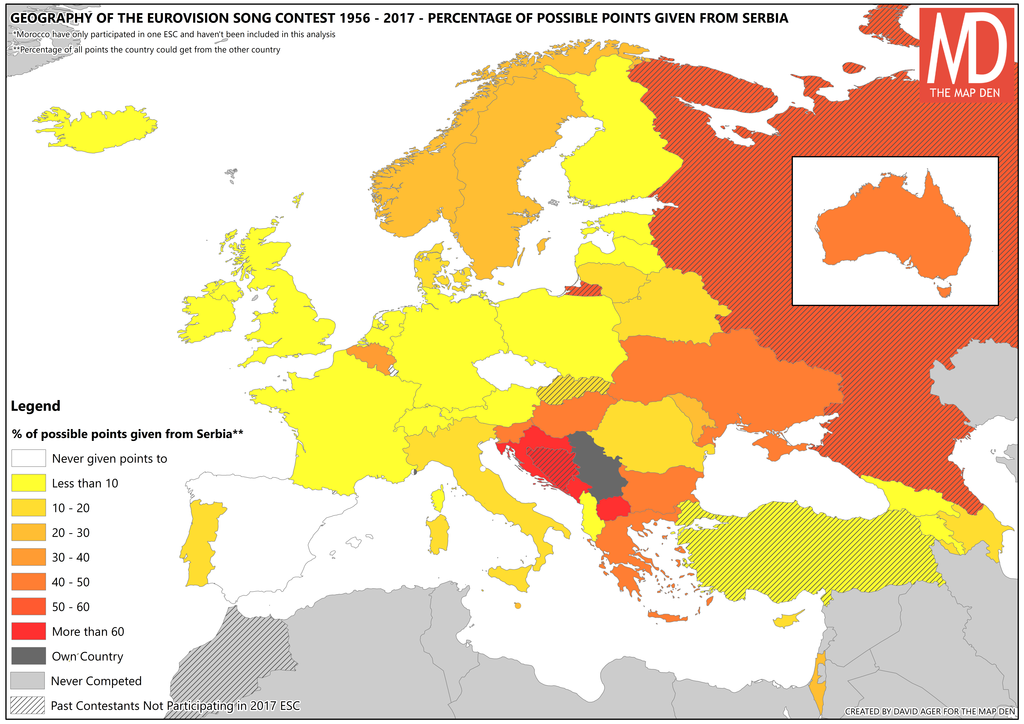
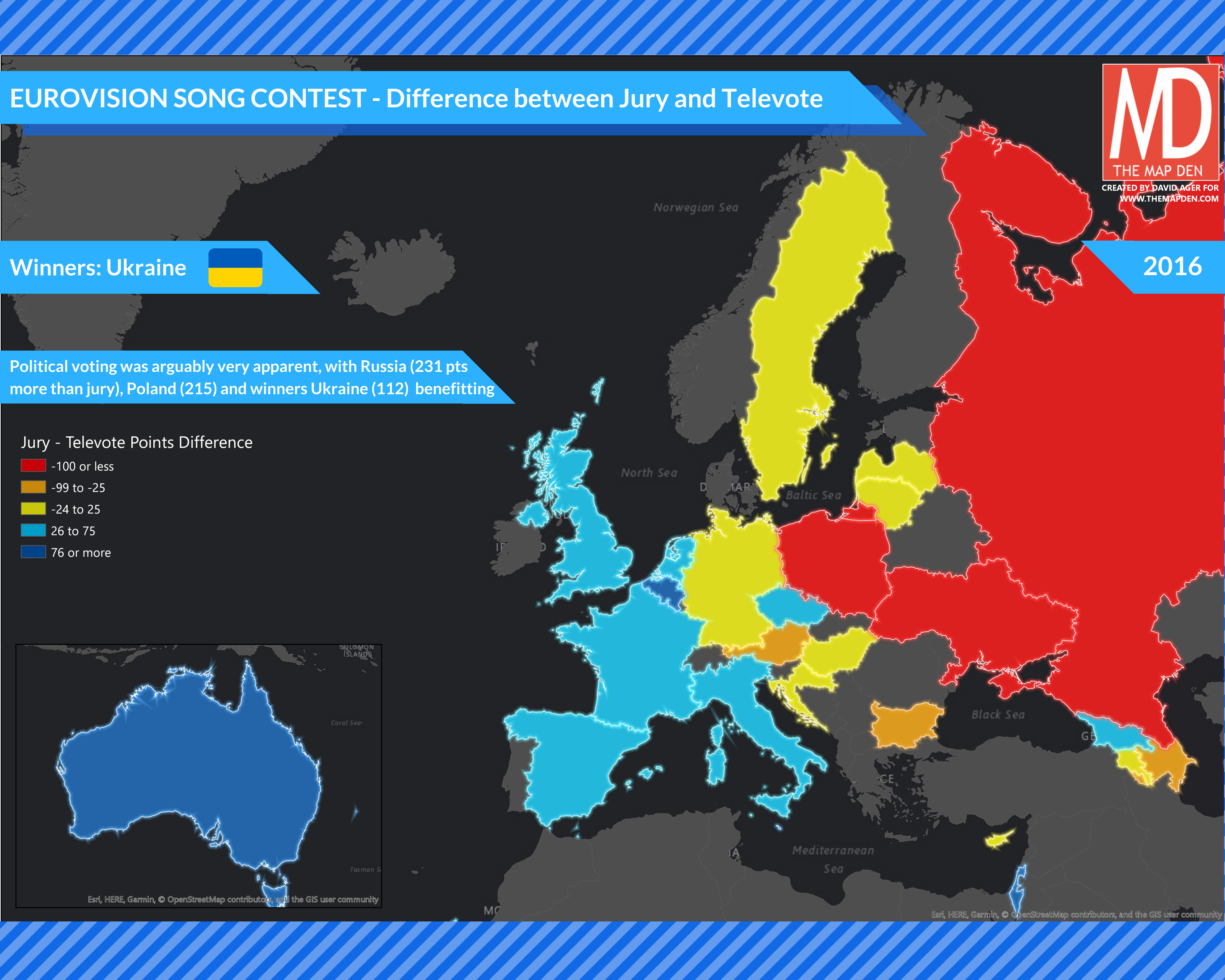
However, since 2016, voting procedures have changed, with a score from a jury added to a score from a public vote, being combined to give an overall points total. This is hoped to reduce influence of political voting with a professional and public opinion of the best song. Taking a look at points difference between jury and public votes though, through maps, show differences in professional and public opinion, and possibly the level of influence of political voting.
Dividing opinion
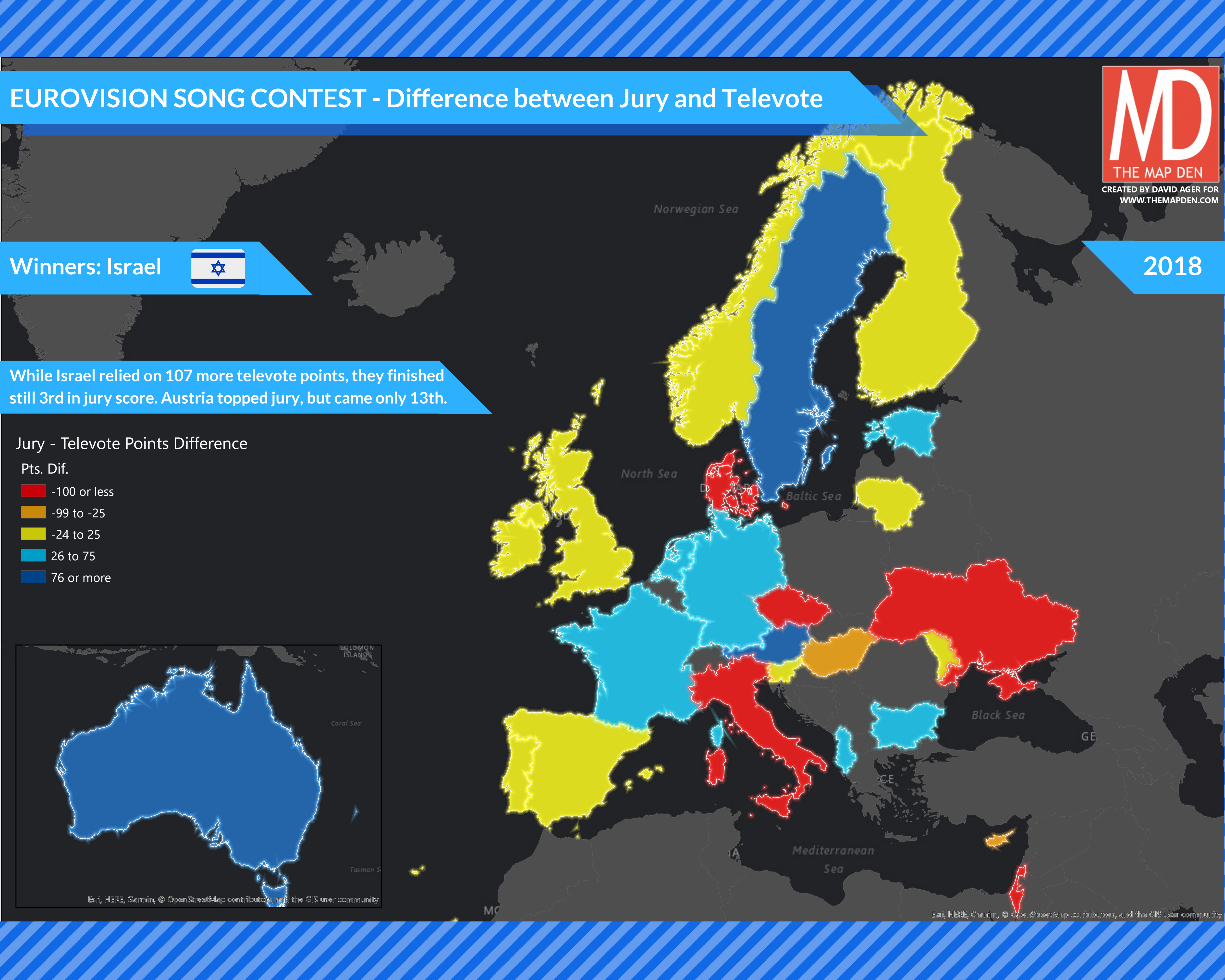
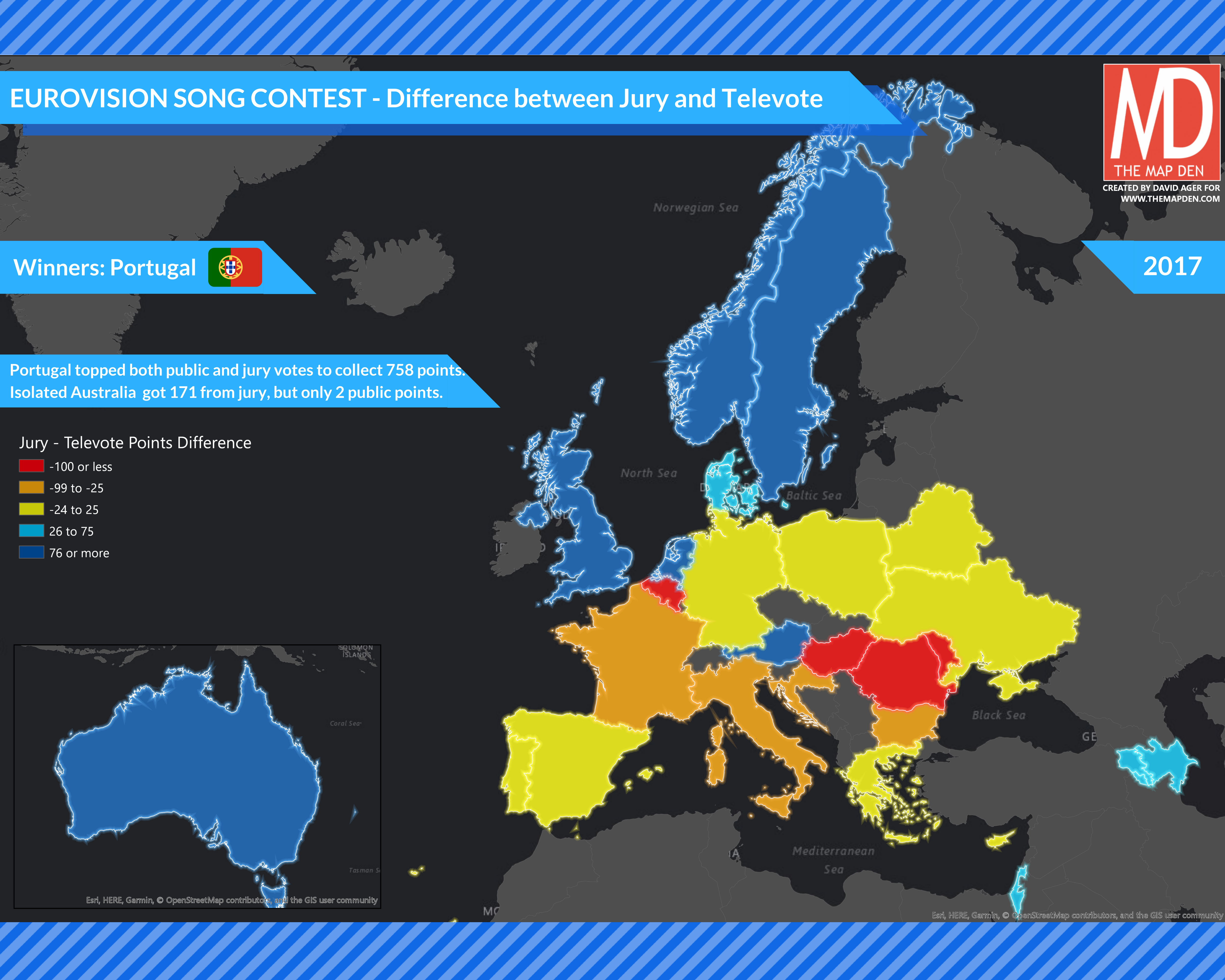
The story of voting in 2018 was an interesting one – winners Israel and second-placed Cyprus, both did well in the jury vote, but it was Austria who topped the jury’s vote. However, the public saw things differently (see above), where Austria finished 13th in the public vote, ruining their chances. This may be down to pure differences of taste and opinion – after all Austria in 2015 (as well as Israel this year) won, despite lacking a true ‘voting’ bloc or tradition. Nonetheless, one shouldn’t estimate the ‘helping hand’ this can provide in winning and losing a contest. The best example of this is perhaps Australia, who despite being on the other side of the world, take part in Euro-vision – anyway that’s a topic for another day. They have always performed reasonably well since recently joining (see maps below), consistently doing well in jury voting, but trail in public votes. However in 2017, while they scored 171 points (4th) from the jury, they received only 2 points from the public vote.
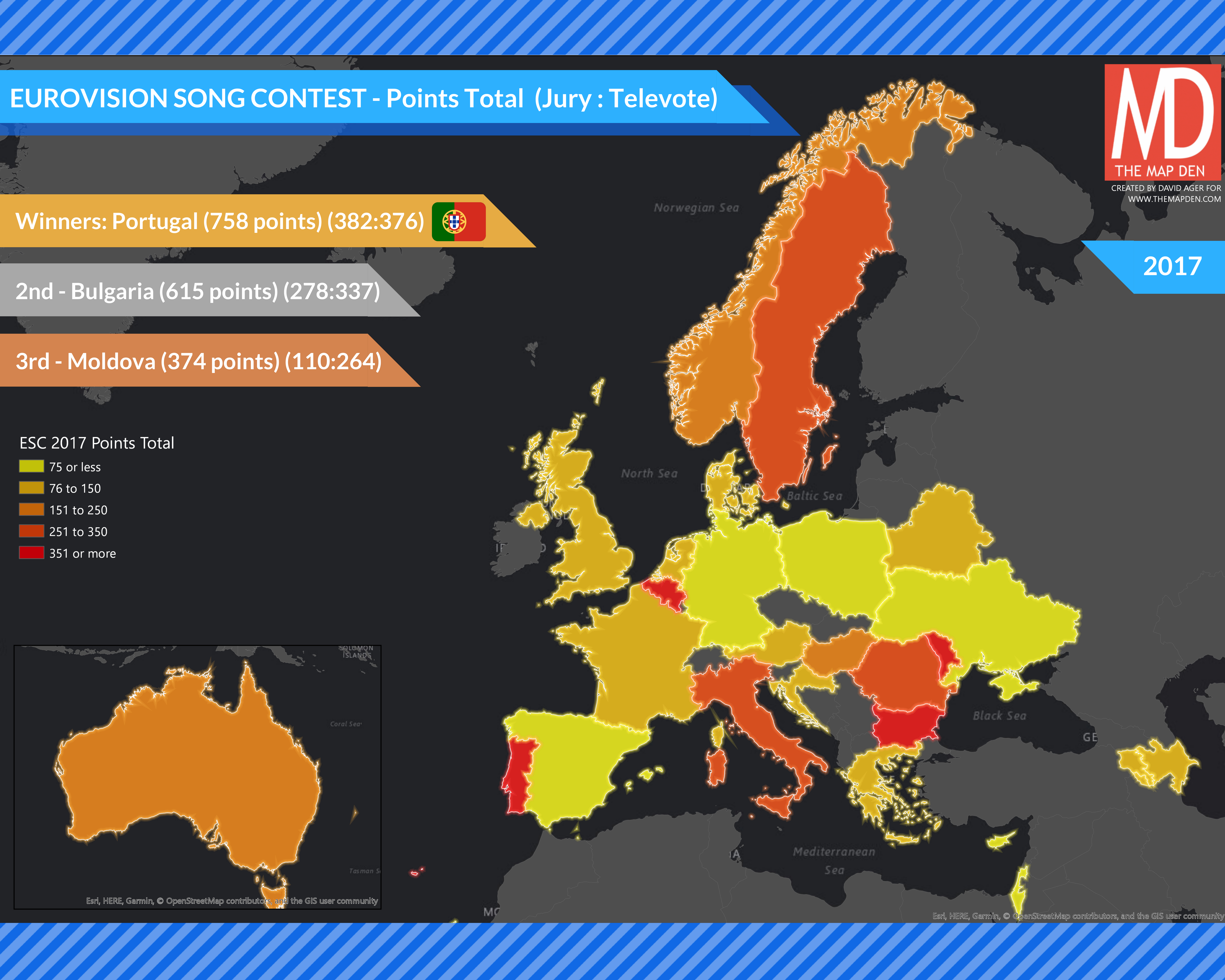
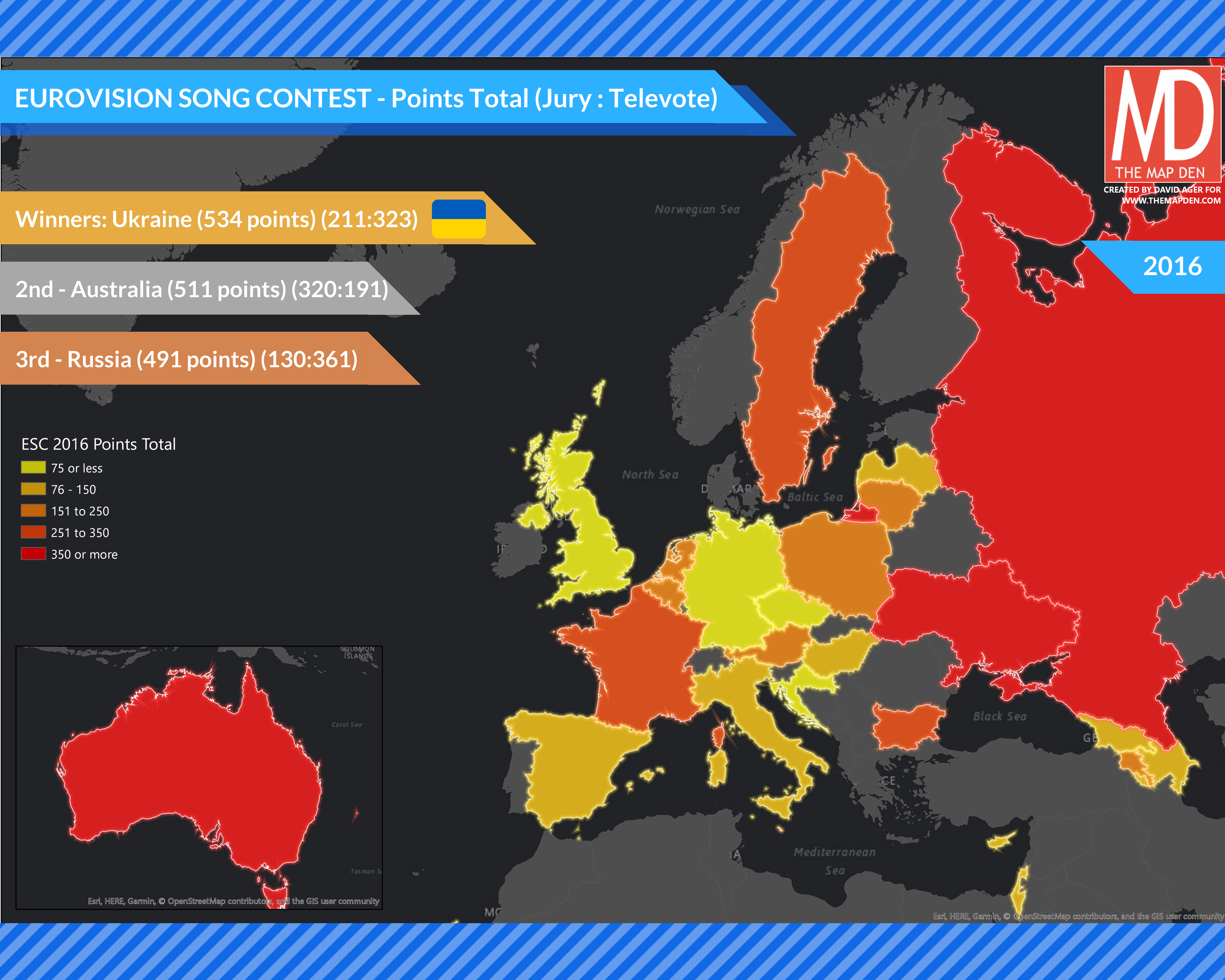
One can see in these maps below from 2016 to 2018, that there is a disparity more generally as well between Western Europe and Eastern Europe, with the ‘West’ tending to perform better in the jury than in public votes. 2017 saw Portugal dominate to win their maiden Eurovision title, with the public and jury matching closely in opinion on the best song – sometimes the best song wins out. It must be pointed out though, even here, the Russian ‘pull’ on votes wasn’t here in 2017, due to them not taking part in the contest in Kiev, Ukraine. In 2016, Australia topped the judges poll, but in an arguably weaker contest song wise (in my humble opinion), they didn’t do as well as public vote, as Russia and Poland gained over 200 more points from the public vote compared to the jury. War-torn Ukraine were also beneficiaries of ‘neighbourhood voting’ (which Australia weren’t), with 112 more public votes helping them to victory.
Hitting the right votes
Ostensibly the Eurovision Song Contest, appears to be just that – a song contest. However, even before the voting, it is more than just that – it is a chance to showcase a country and its culture on a now global stage, and use gimmicks, dancing, and even music (!), to do this. The voting is just another dimension to this – demonstrating culture, history, neighbourly harmony (or disharmony) and diaspora patterns over a few hours. It is great fun, especially as a geographer, and the analysis show among other things, there is no accounting for taste – given the differences between jury and public opinion.
Analysing the last 3 years contests and before shows that it is possible to win with the best song, Israel and Portugal have overcome geography to triumph. However, as Australia, UK and other ‘Western’ nations have shown, helping hands from neighbours, diaspora and ‘blocs’ are useful, particularly in ‘weaker’ years. The history of political voting is just another ‘tradition’ in this strange contest, but usually the most popular song will tend to strike a chord. Off to Israel next year, where I’m sure politics won’t come into the ESC again…
Happy Mapping,
David
1 Comment